
A Church of Vision and Action
Our church leans into the future with a vision of where and how we might best serve God’s people. We treasure our historic sanctuary and our beautiful modern FAITH Center. Both are used by hundreds of people all week in the vibrant city center that did not exist when our founding pioneers built the first church. We build spaces for people yet to come and ministries yet to be conceived, as we step out in bold, progressive Christianity.
Early Days
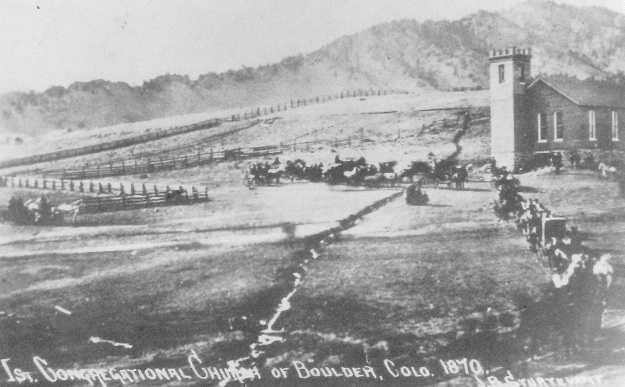
Fourteen spirited souls founded our church in a cottonwood grove east of Boulder near Valmont Butte in 1864. Looking into the future they wanted to provide for the greatest number of people possible so they soon moved their church into Boulder because they believed it would become the county seat, the center of education and business. They worshipped in the local schoolhouse for two years. They chose a barren hillside above the creek to build their church where the tower would be visible for miles down the valley, attracting people to worship, and there they built their first church in 1870. As their numbers grew over 100 they began work on a new church across the street, completed in 1907, it is the oldest Congregational Church in Colorado, and is still a place of vibrant worship today.
Growth for a New Century
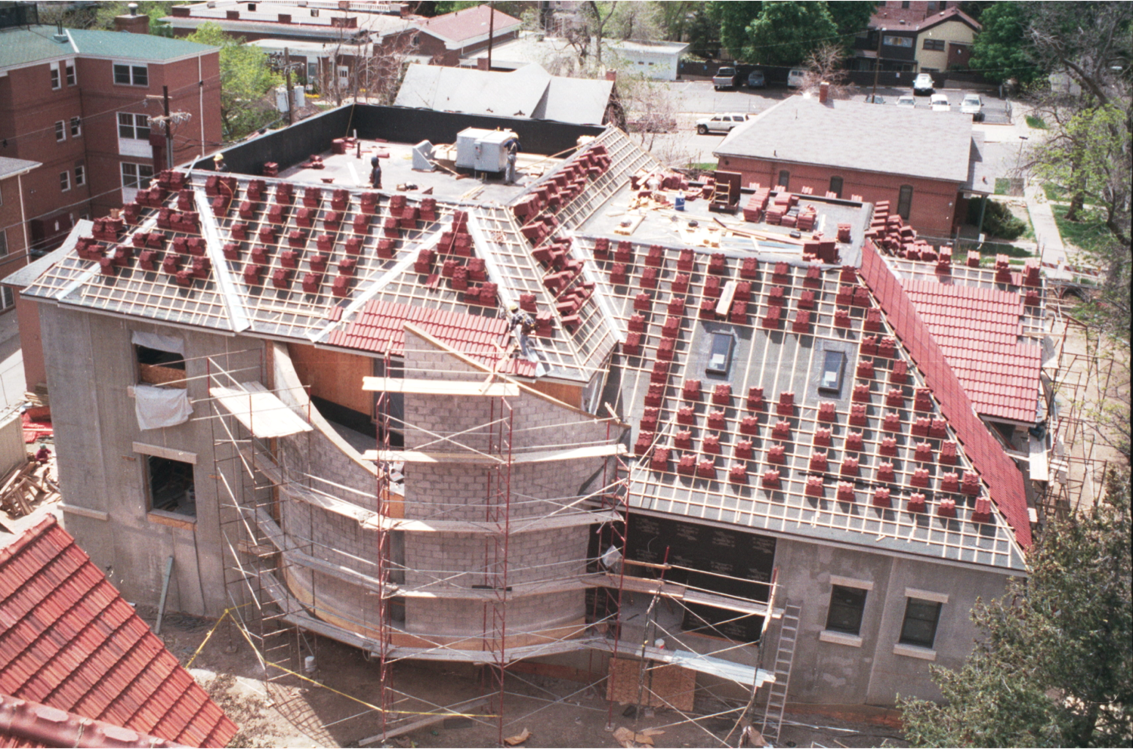
In order to accommodate a growing membership of 900, and provide greater outreach to the Boulder community, in 2001 the church voted to expand and renovate our campus with an ambitious three part building plan that included the building of the three floor FAITH Center, renovation of our historic sanctuary, and the creation of a link between the two buildings. From initial dreams through three capital campaigns and untold building committee meetings, the church journeyed twelve years to arrive at the beautiful church campus that buzzes with activity today. To see the church calendar click here.
Inclusion and Welcome
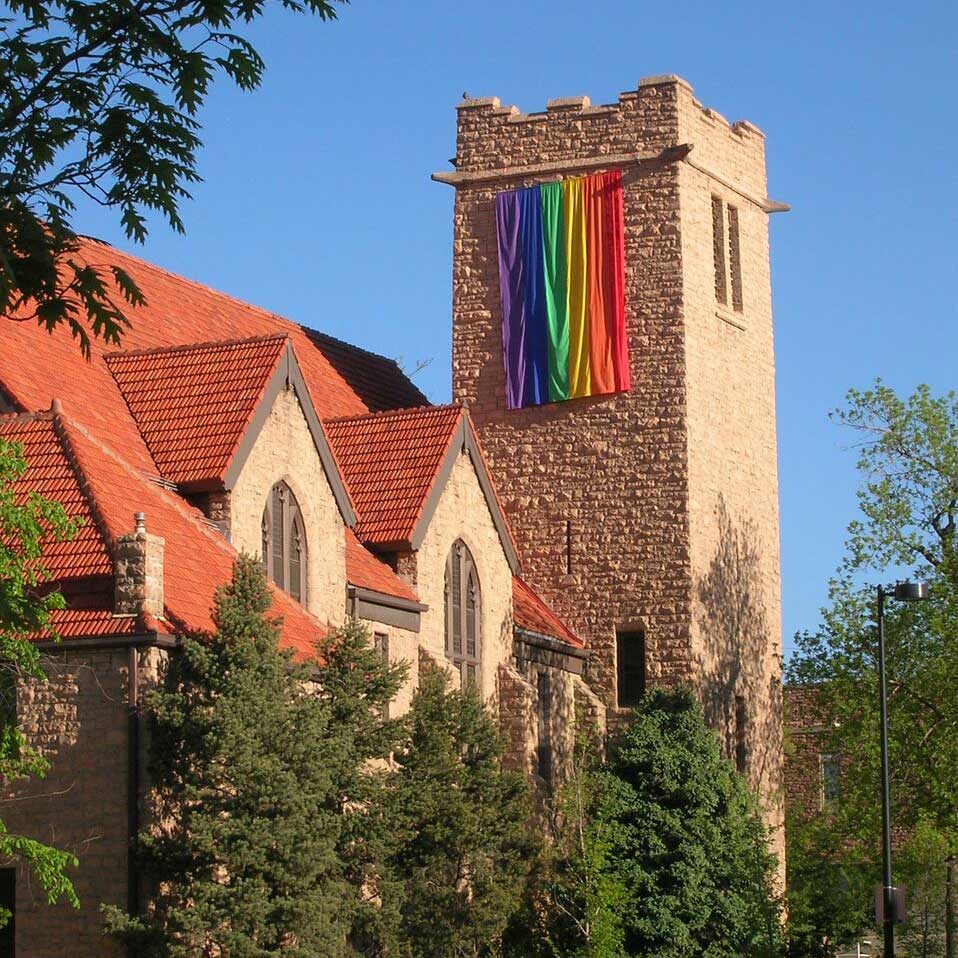
The church became part of the newly formed United Church of Christ (UCC) in 1957, a denomination that combined churches of the Congregational Christian and the Evangelical and Reformed denominations. The history of the UCC reveals early members as abolitionists and human rights advocates. Reflecting the new denomination’s call to inclusion, in 1987 The First Congregational Church, Boulder, became the the first “Open And Affirming” UCC church in the state and the 16th in the nation, designating its openness and welcome to people of all sexual orientations. In 20 17 we celebrated the 30th Anniversary of our O&A Covenant. In 2010, we became the first church in the Rocky Mountain Conference to become Accessible to All (or A2A), which designates our commitment to the inclusion and welcome of people who live with disability. In 2014 the church pioneered the WISE (Welcoming, Inclusive, Supportive and Engaged) Covenant for all with mental health challenges and their families. Today mental health ministry is spreading throughout the United Church of Christ as more churches vote to become WISE congregations.